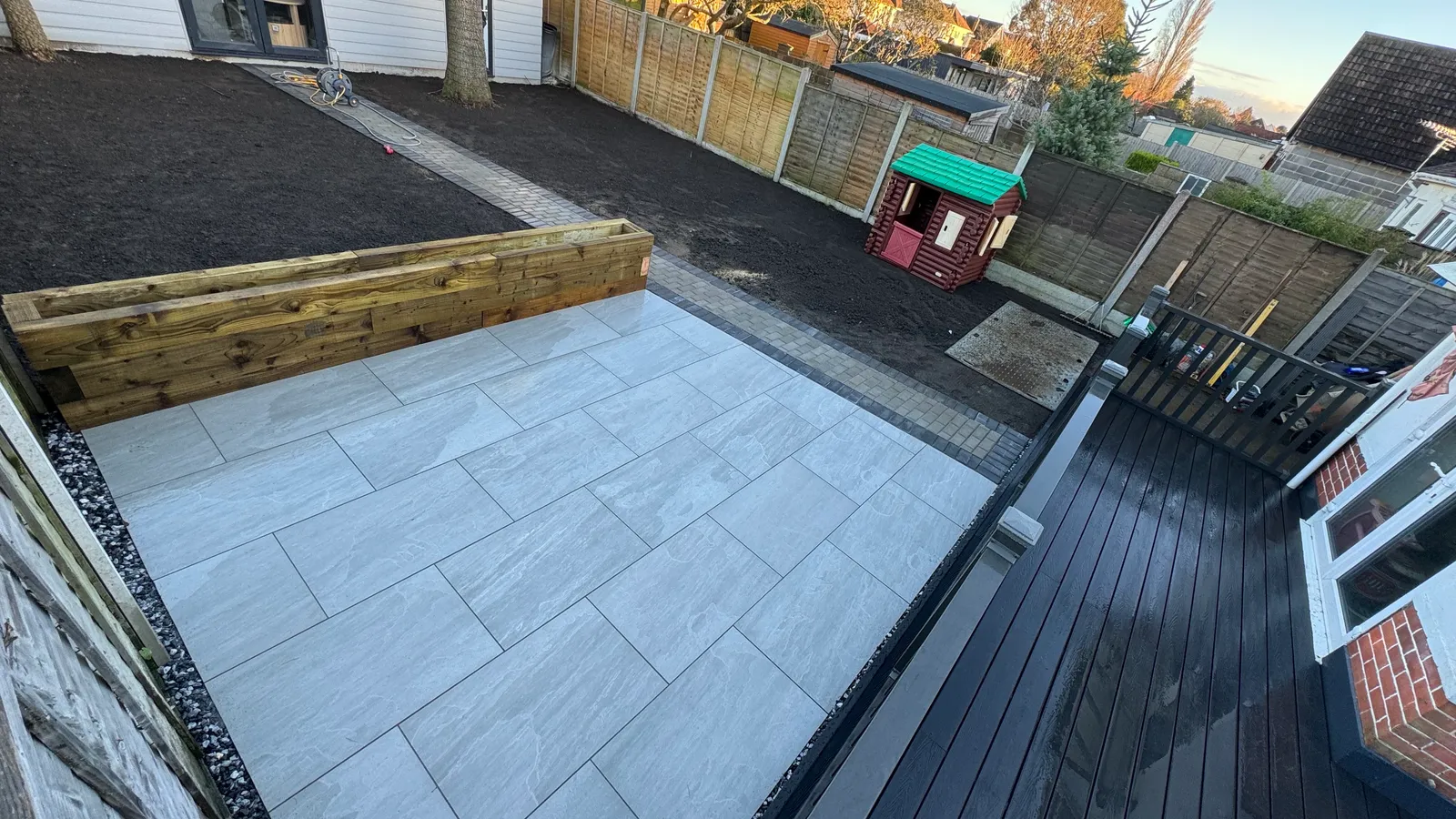
Landscaping
Does your patio need replacing, or just cleaning?
How to tell the difference between a patio that has got dirty and a patio that has actually failed.
18 August 2026 · 4 min read
A tired-looking patio is not necessarily a failed one. Plenty of patios we are asked to replace turn out to need a thorough clean and some attention to the joints. Equally, some that look passable have a problem underneath that cleaning will not touch. Here is how to tell which is which before you spend anything.
Problems that clean off
Green film, black spotting and general grime are surface problems. They look dramatic, particularly after a wet winter, and they come off. Slabs that have gone dull rather than damaged usually come back well. Weeds growing in the joints are irritating but are a jointing problem, not a structural one.
If your patio is level, the slabs are sound and the only complaint is how it looks, cleaning and re-jointing is almost always the right answer.
Problems that do not
These point at the base rather than the surface:
- Rocking slabs. A slab that moves underfoot has lost contact with what it was bedded on. One or two can be lifted and re-bedded; a patio full of them is telling you about the base.
- Standing water. Puddles that sit for hours after rain mean the falls are wrong. A patio should shed water away from the house, and no amount of cleaning changes the levels.
- Water sitting against the house. This one matters. If the patio has been built up too high, or falls back toward the wall, it can bridge the damp-proof course. That is worth acting on rather than living with.
- Cracked slabs across the middle. A slab cracking through the centre usually means it is unsupported underneath rather than that the slab was faulty.
- Sinking in one area. A dip that grows over time is a base or drainage issue.
The middle option people forget
It is not always all or nothing. If the base is sound but the surface has had its day, the slabs can be lifted and replaced onto the existing base. If only one area has failed — often where a downpipe discharges, or where a route gets the heaviest use — that section can be rebuilt without touching the rest.
If you are replacing anyway, think about the layout
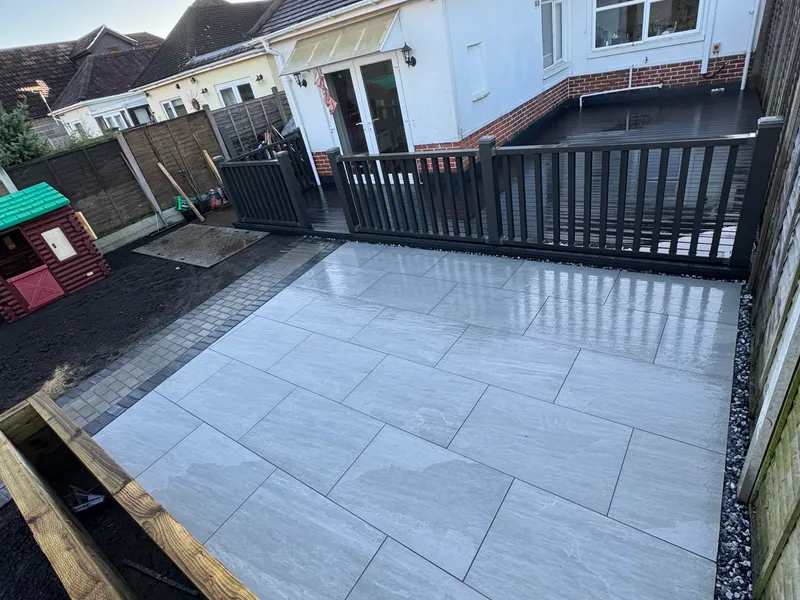
A patio replacement is the cheapest time to change the shape, because the ground is already open. It is worth asking whether the patio is actually in the right place: many are sized and positioned by whatever was there before rather than by where the sun falls or how the garden is used now. Levels, steps, a wider run of paving where the table goes, or a path linking through to a shed or garden room are all far easier to build in at this stage than to add later.
We take on patios and garden landscaping across Poole, Bournemouth and Christchurch — clearance, groundwork, paving and the boundaries that go with it. If you are unsure which category yours falls into, ask us to come and look, and we will tell you straight. Estimates are free and no-obligation.